
Why most men over 40 never get lean — in 16 slides
Coach Voices · 2026-10-18 · 6 min read
Sixteen slides on the stealth surplus, the weekend reset, ego lifting and the one skill nobody practises. A retelling of Kevin Boyle's 11-years-a-trainer talk.
Original author: Kevin Boyle — personal trainer of 11 years, Apex Dad with Kevin Boyle. Every idea below comes from his talk "11 years as a trainer: here's why most men over 40 will never be lean" (22 June 2026). The slides are our own illustrations of his points and the words are our retelling — the thinking is his. Watch the original, it is worth the 22 minutes.
Sixteen slides on why men over 40 stay stuck, and what actually moves the needle. Not one of them is a supplement, a fasting window or a seed-oil theory. It is mostly about counting what you never sat down to eat, and learning to be slightly hungry without treating it as an emergency.
1. Fat loss frustration?

Most men who are stuck are not missing information. They are missing one specific thing, and it is rarely the thing they are busy fixing.
Before you change the training, the supplements or the plan, find out which link in the chain is actually broken. Guessing is expensive.
2. Weight loss is not fat loss
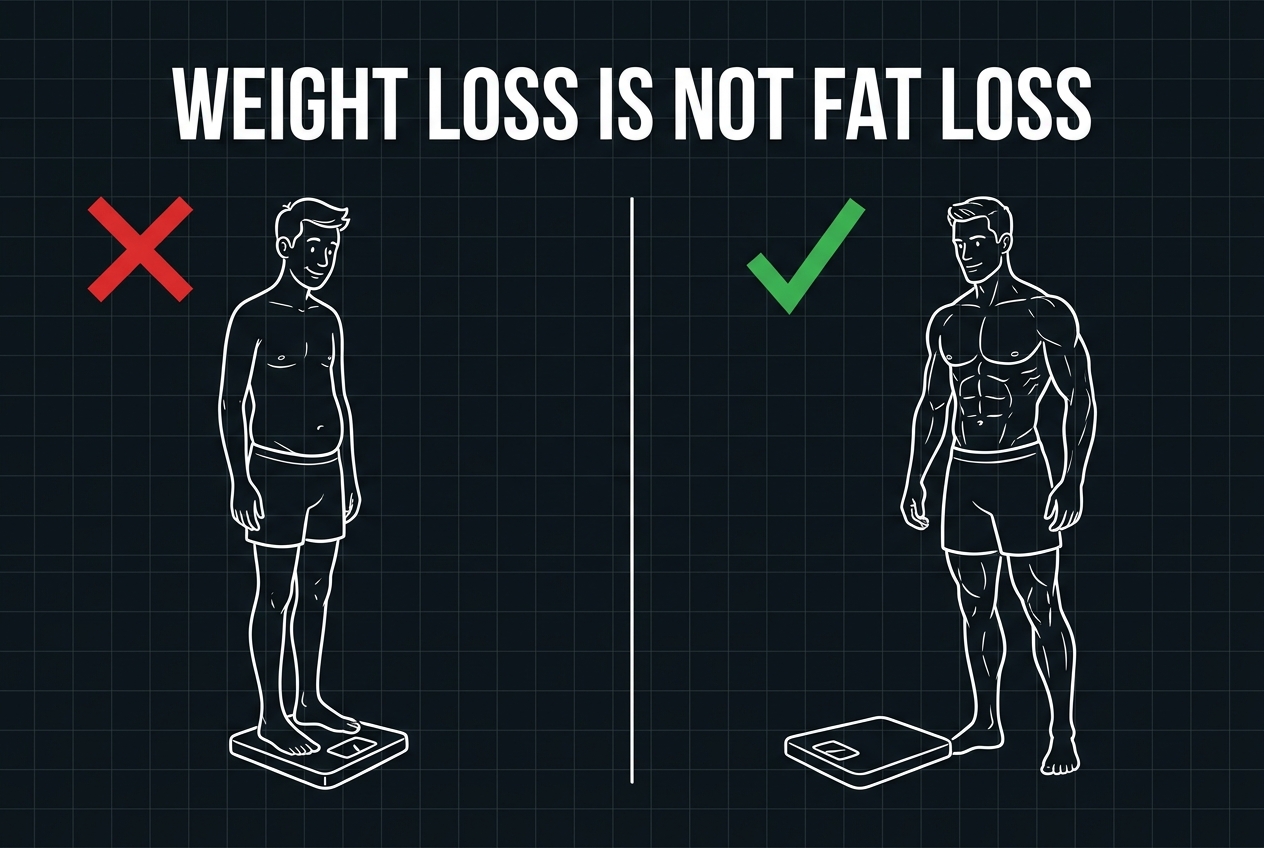
The scale cannot tell the difference between fat, muscle and water. It only reports the total.
Crash hard enough and it will happily reward you for burning off the muscle you spent years building, and leave you smaller, softer and slower than when you started.
Chase fat loss. The weight follows.
3. Marketing vs maths
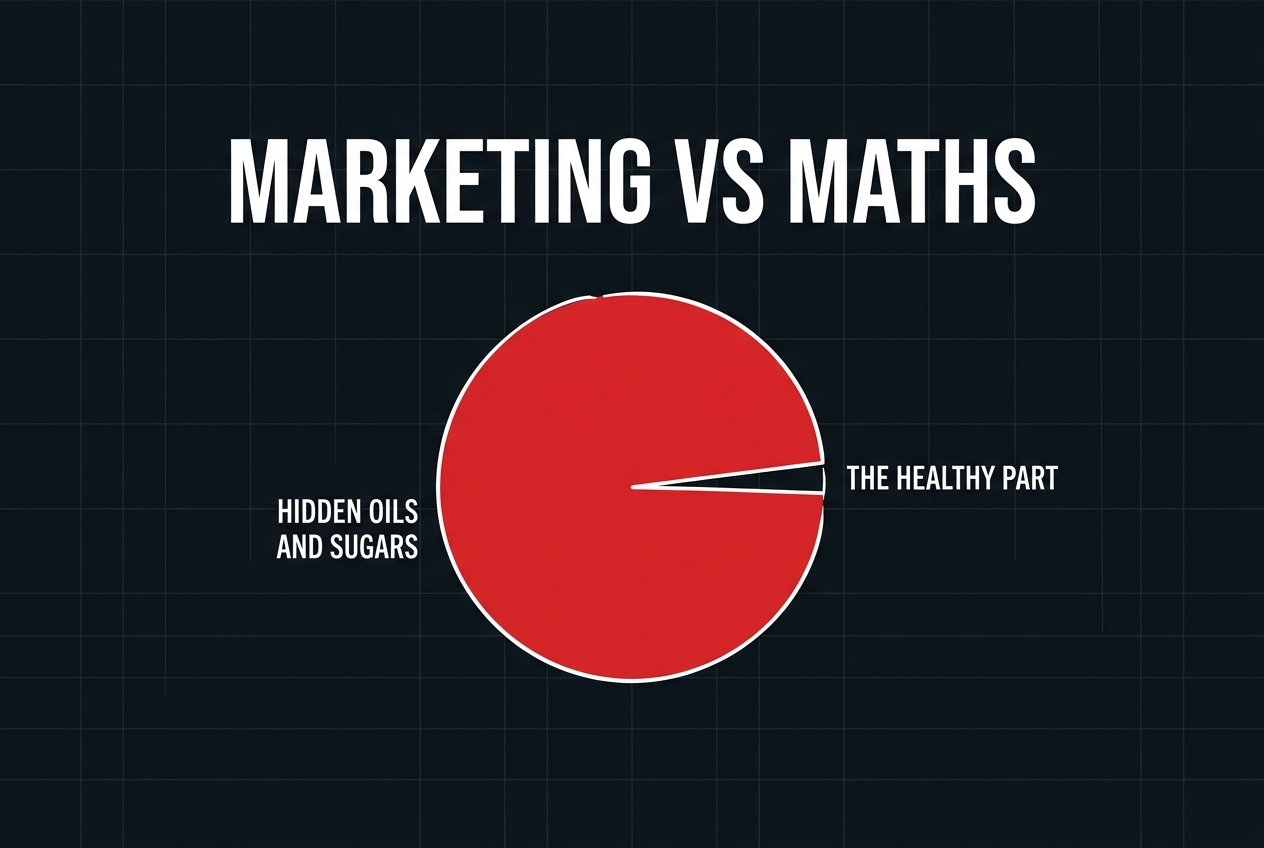
A dish gets sold on its one honest ingredient. The chicken. The avocado. The oats.
What the menu never mentions is the oil it was cooked in, the sauce it was finished with and the sugar that made it taste that good. That is the part doing the damage.
You are not failing at willpower. You are eating a number nobody told you about.
4. Lean men are boring
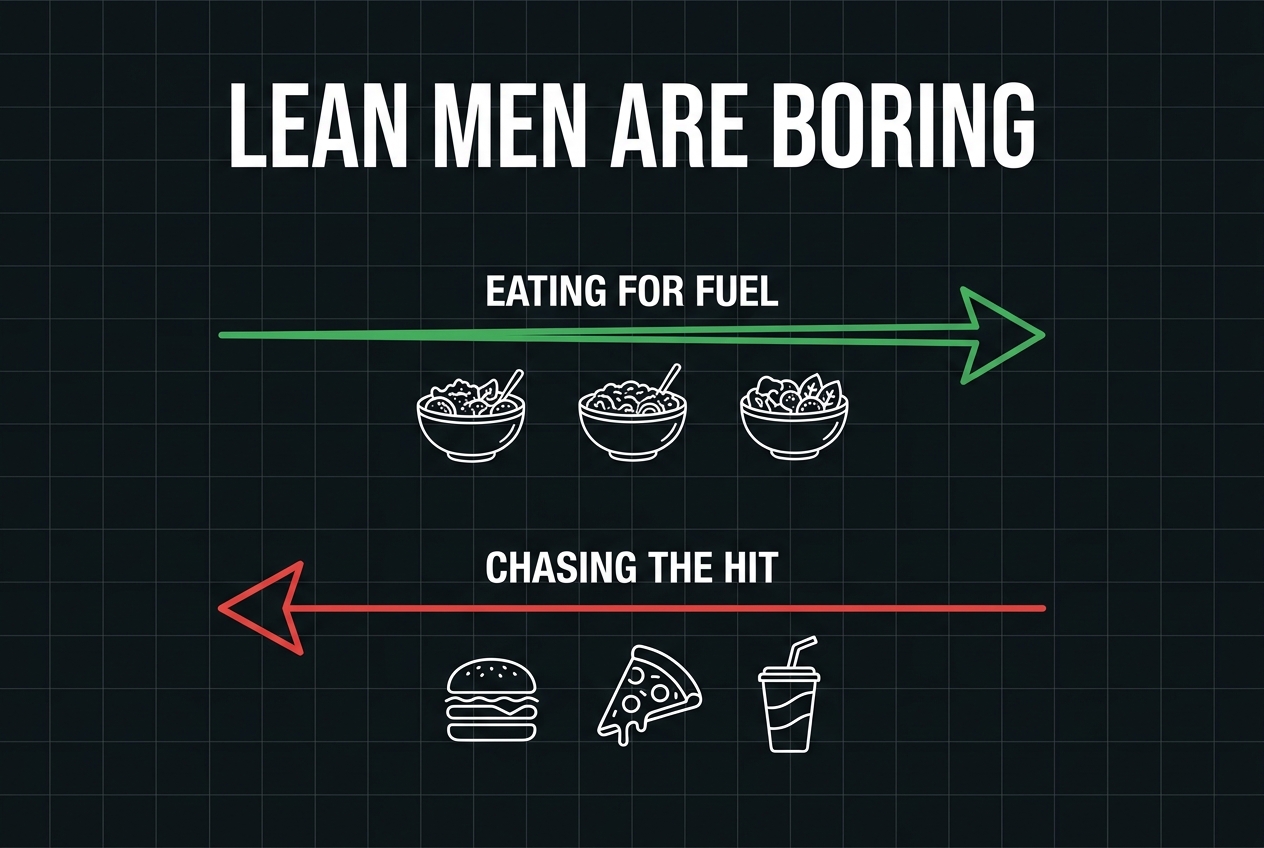
Lean men eat the same handful of meals most days and barely think about it. It looks boring from the outside because it is boring. That is the point.
The other way round is eating for the hit — the burger, the pizza, the sweet drink — and then negotiating with yourself afterwards.
Boring food is not a punishment. It is what removes the daily argument.
5. The pint problem
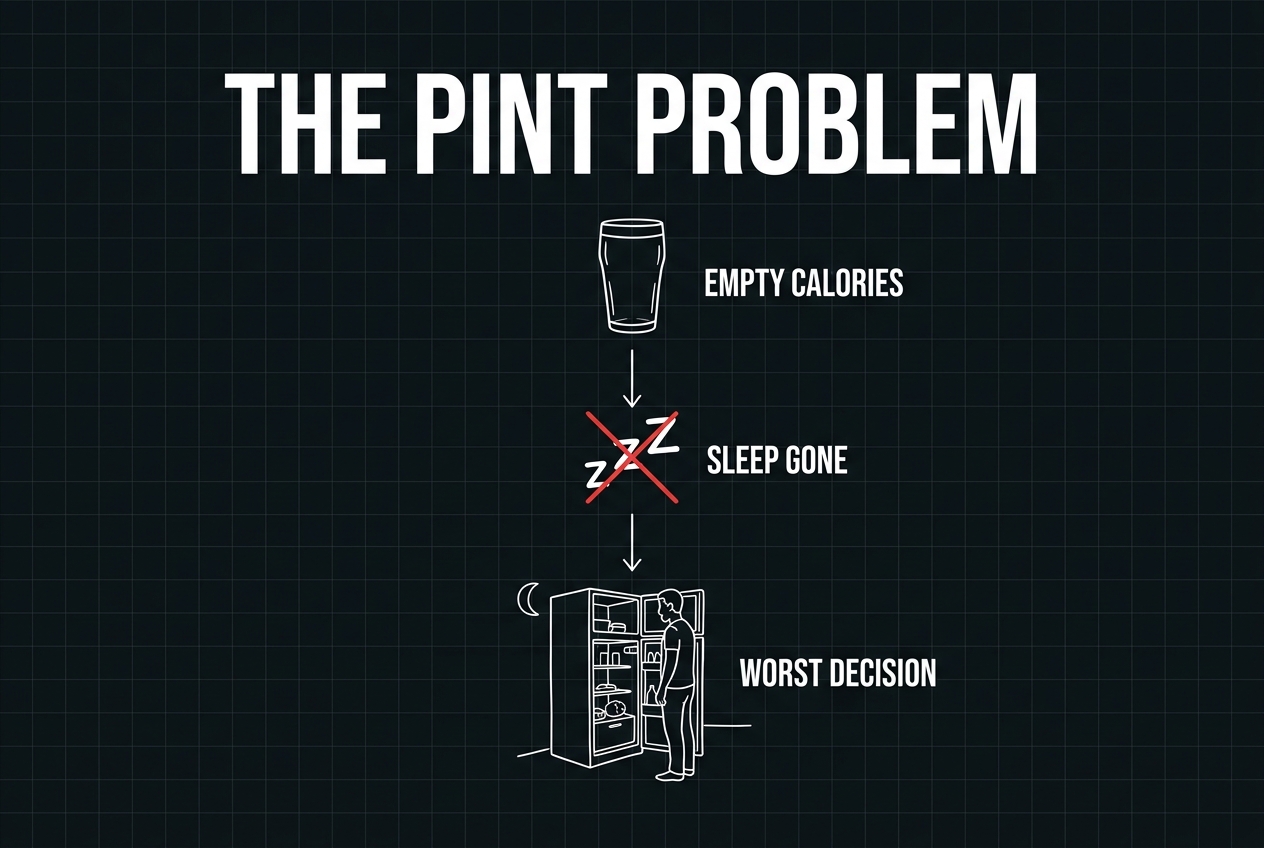
The drink itself is only the first cost. It is empty calories, and that much is obvious.
The second cost is your sleep, which it wrecks even when you feel like you slept fine. The third arrives at the fridge door at midnight, when every decision you make is a bad one.
One night out is rarely one night of damage. It is usually three.
6. Nothing good happens after 10 pm
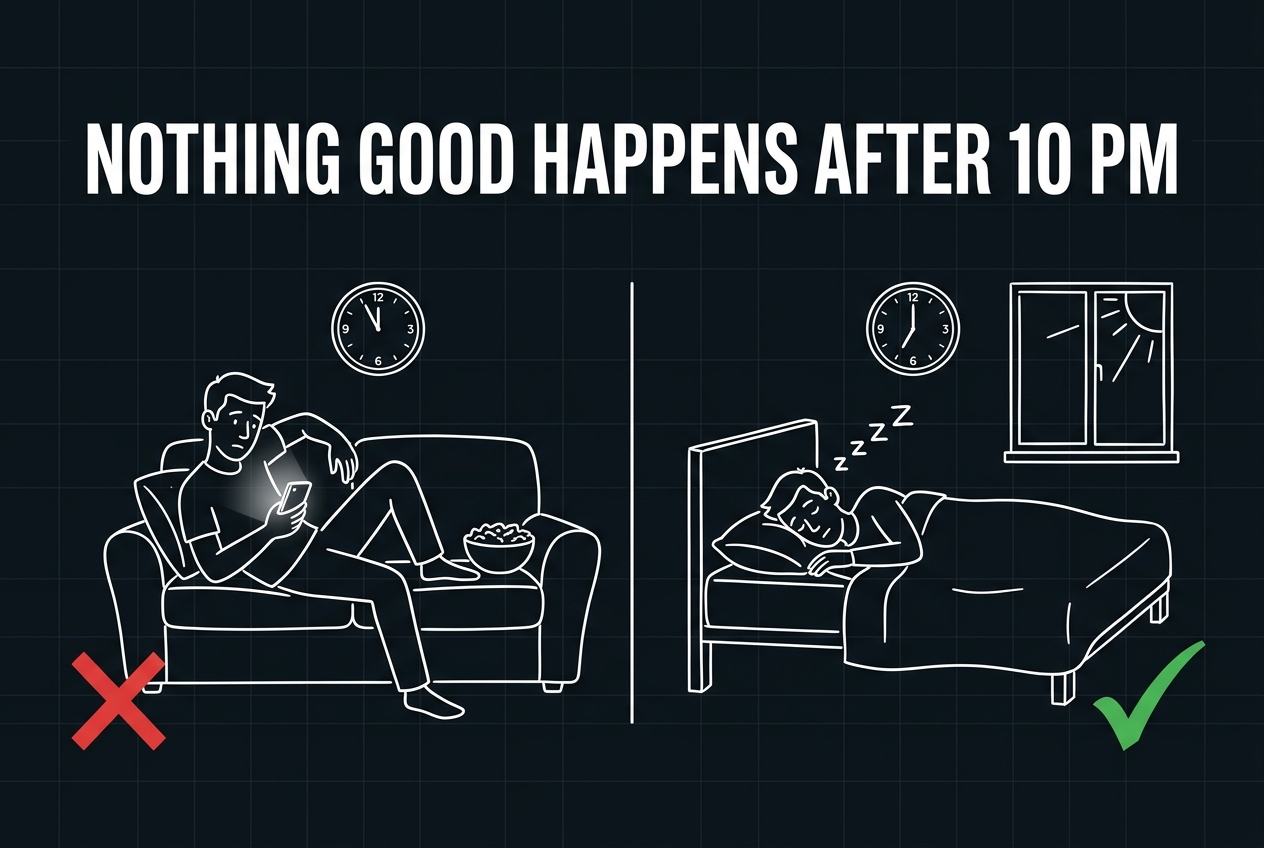
Late nights take two bites out of you: whatever you eat standing at the fridge, and the sleep you were supposed to be getting instead.
Shut the kitchen and go to bed. It is the single cheapest change on this list.
7. The weekend wipes out the week
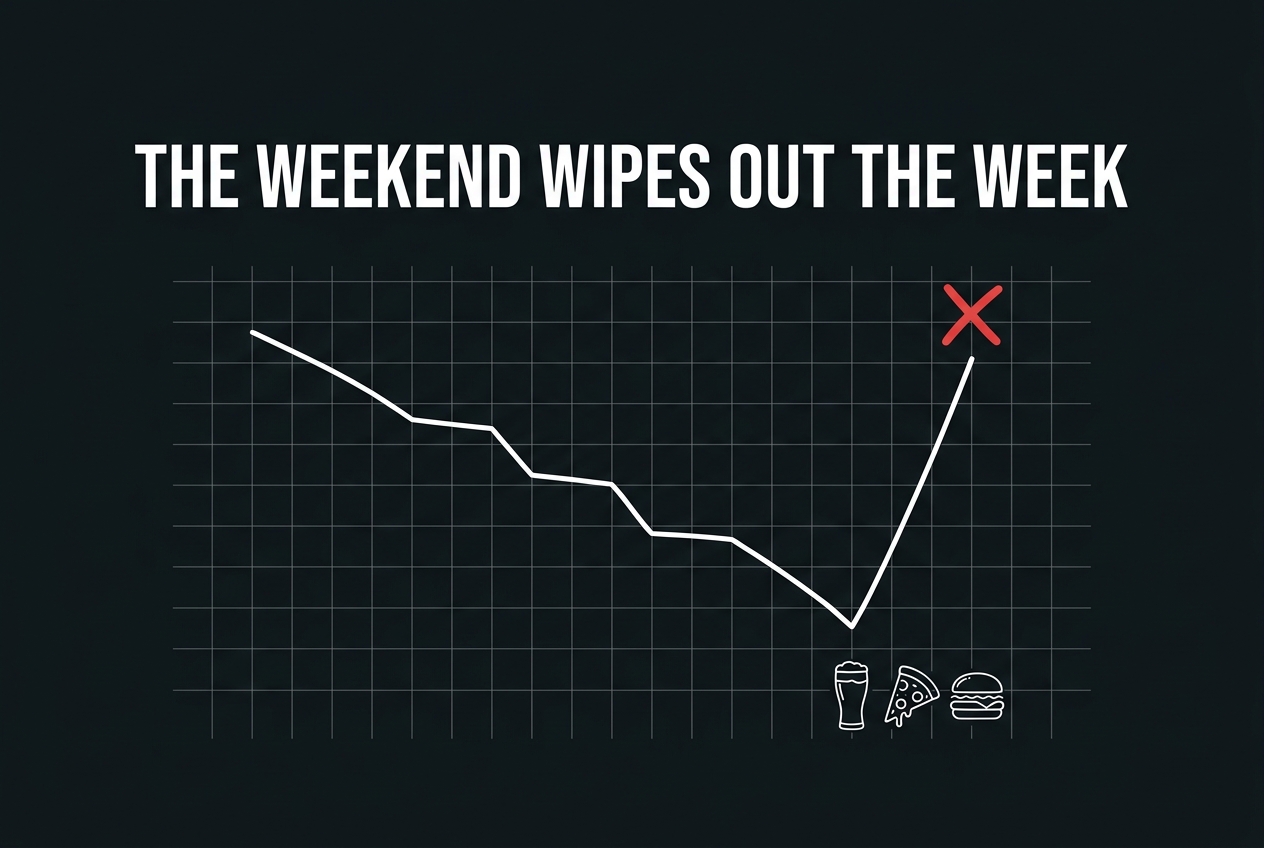
Five disciplined days build a deficit. Two unplanned days can erase the lot, and most men never connect the two.
You do not need a perfect weekend. You need a weekend that does not cancel the week.
8. The stealth surplus
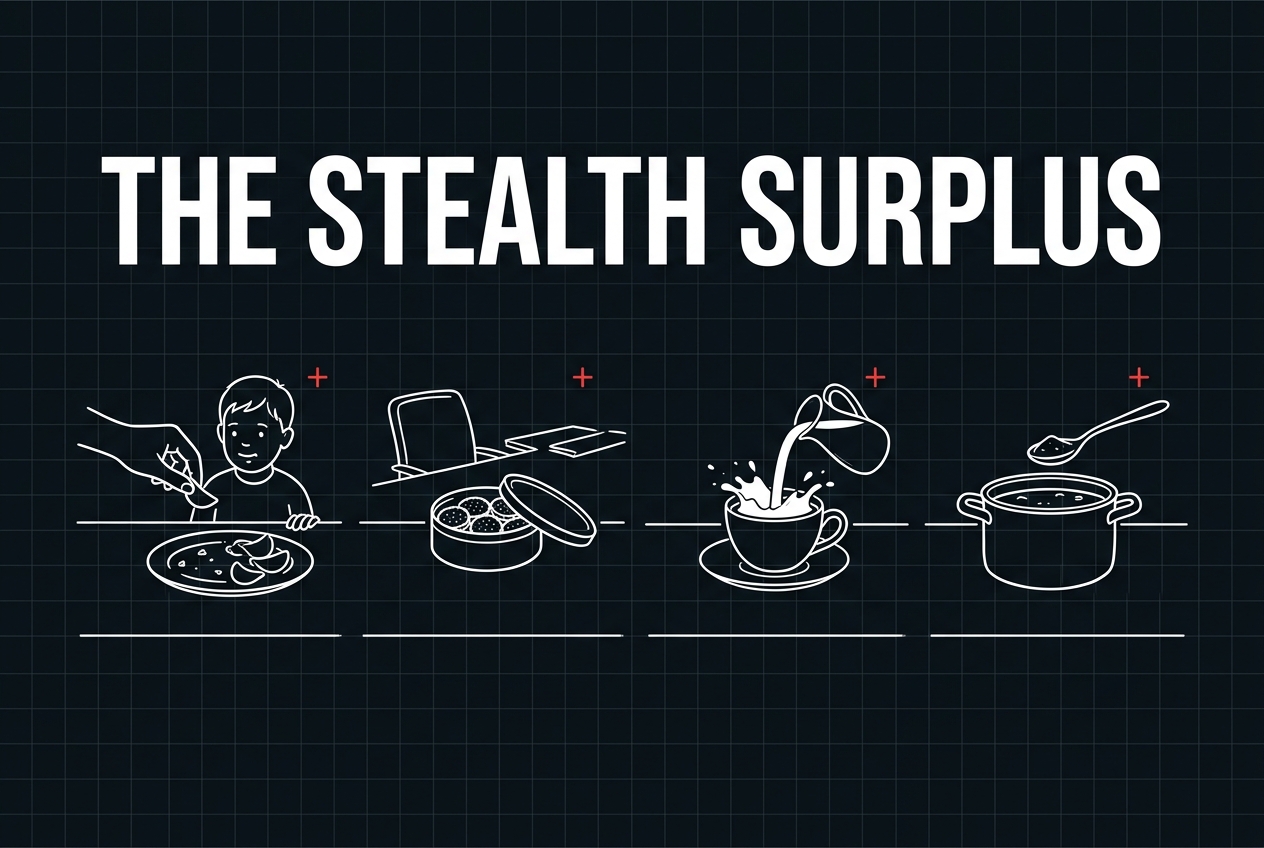
The chips off your kid's plate. The office biscuit. The milk in four coffees. The spoon you licked while cooking.
None of it felt like a meal, so none of it got counted — and together it is often the entire reason the deficit never appeared.
9. Discipline, not time
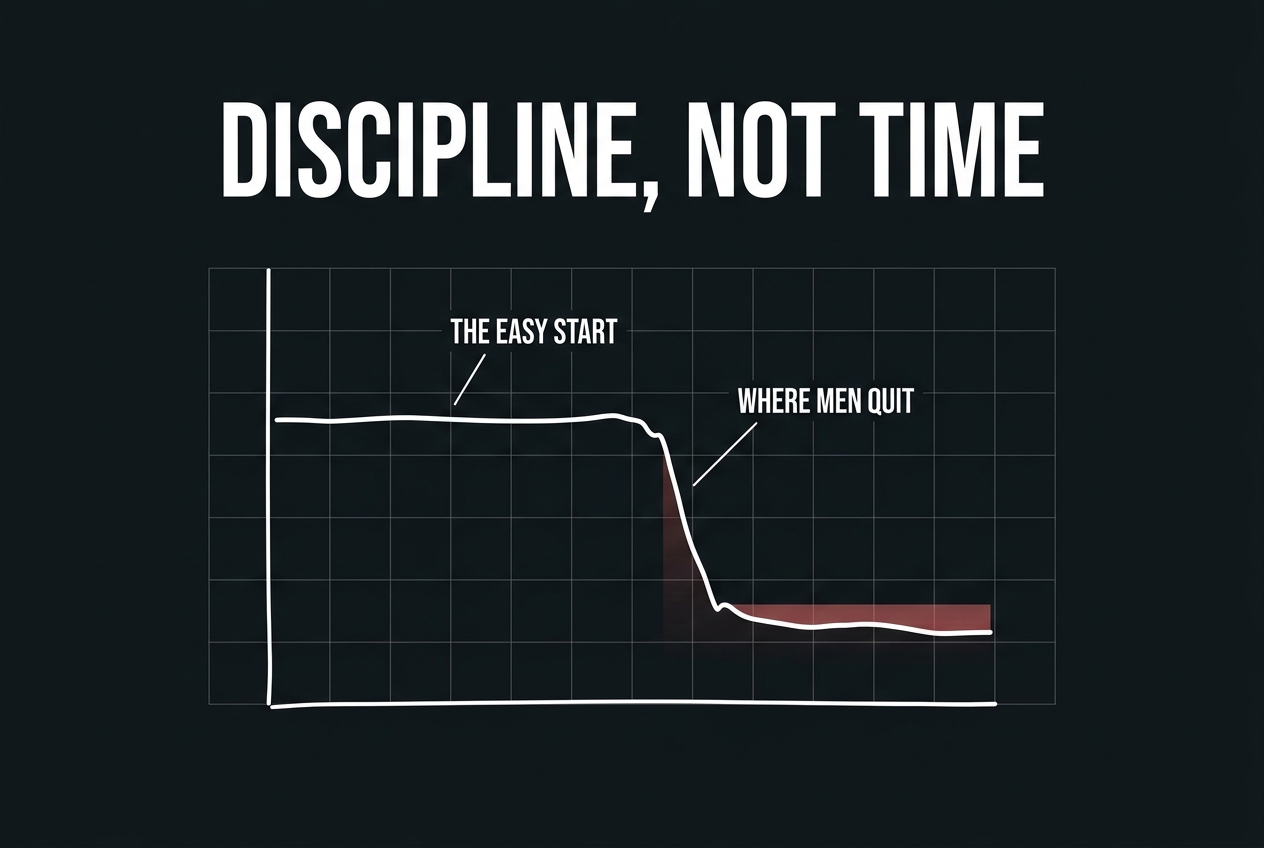
The first few weeks are easy. Motivation is free, the scale moves, everyone notices.
Then it flattens, and that is exactly where most men quit — not because the plan stopped working, but because the applause stopped.
Nothing was wrong with the programme. You just met the part that requires discipline instead of excitement.
10. Cardio penance doesn't work
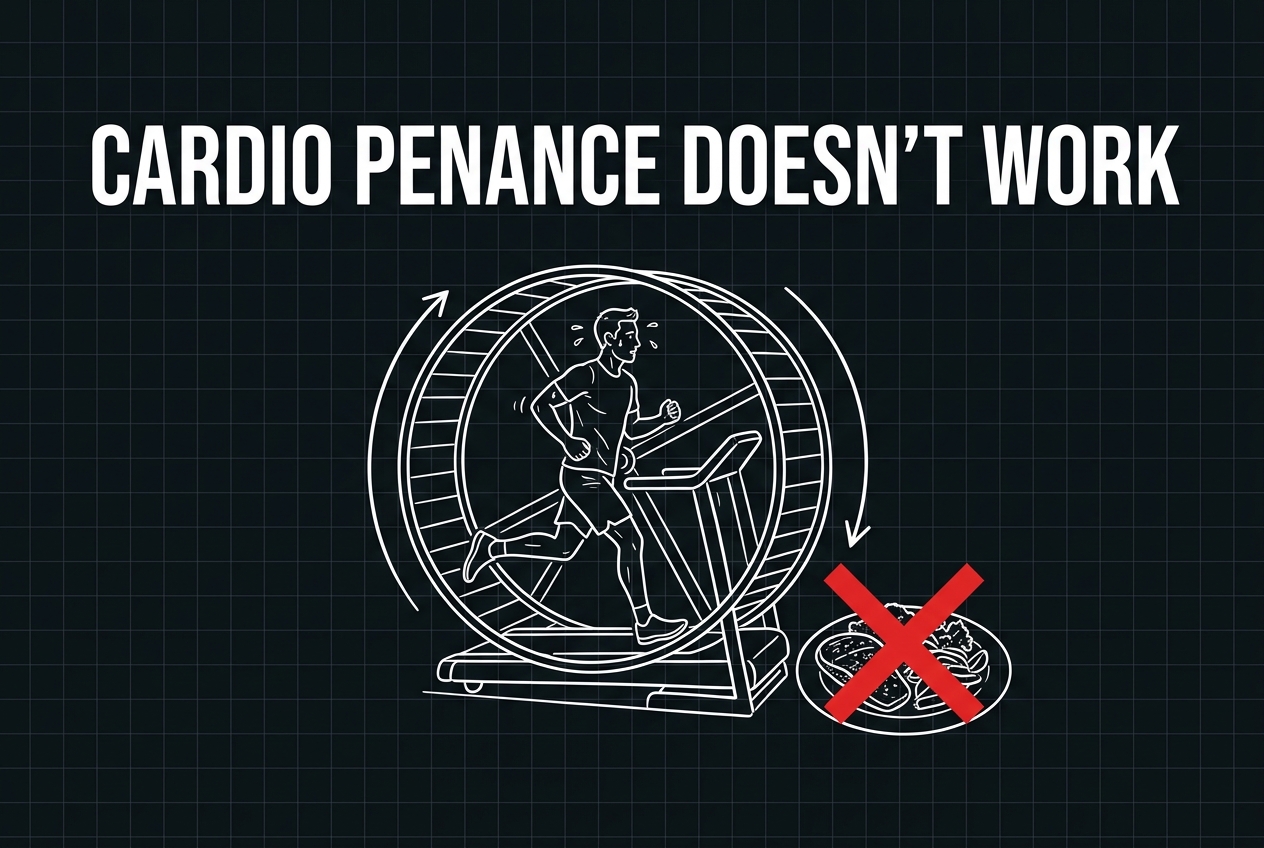
Treating cardio as punishment for eating turns training into a hamster wheel: eat, repent, repeat.
It also makes you hungrier, which funds the next round. Fix the food, then let training build something.
11. Muscle is the engine
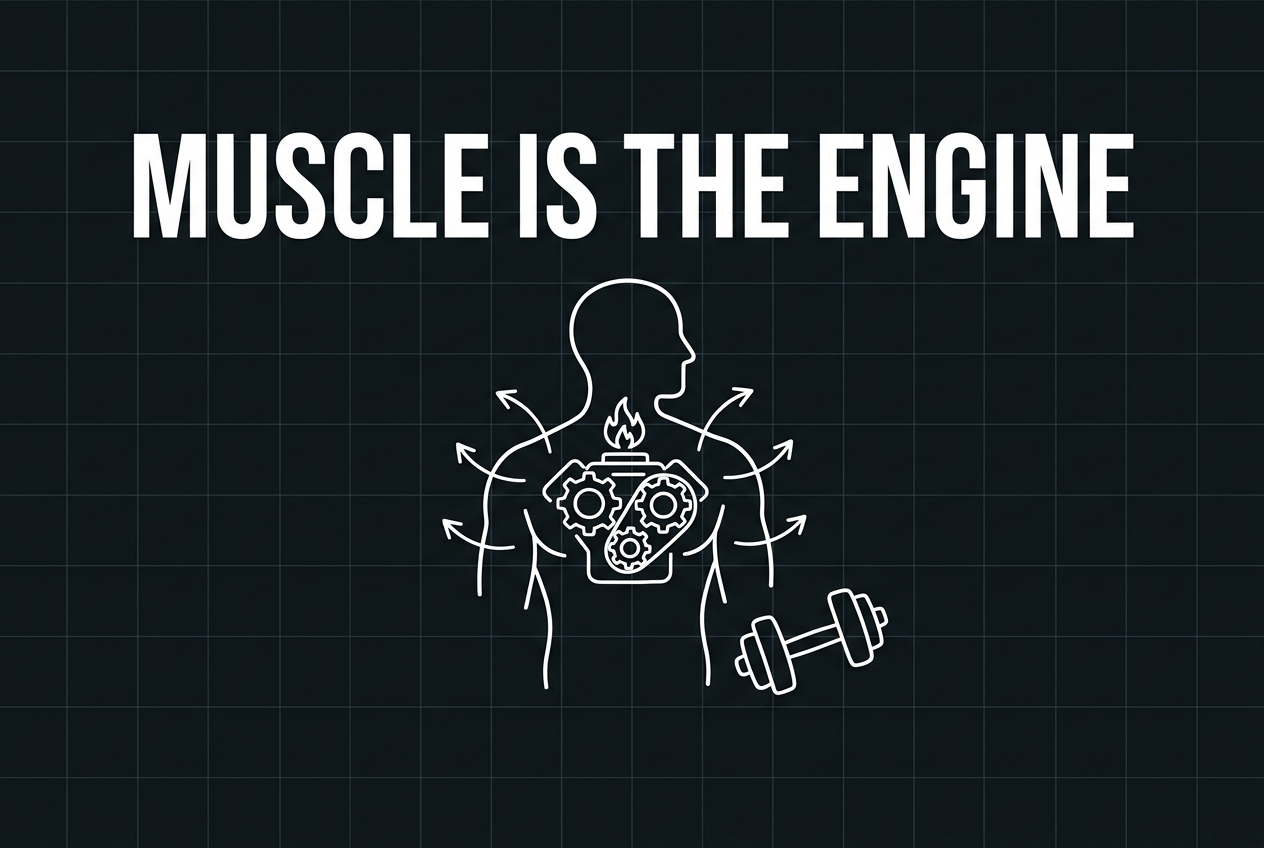
Muscle is the only tissue that burns while you do absolutely nothing. Build more of it and the maths of every day shifts in your favour.
That is why lifting beats endless cardio for fat loss: cardio spends energy for an hour, muscle spends it for a lifetime.
12. Ego lifting
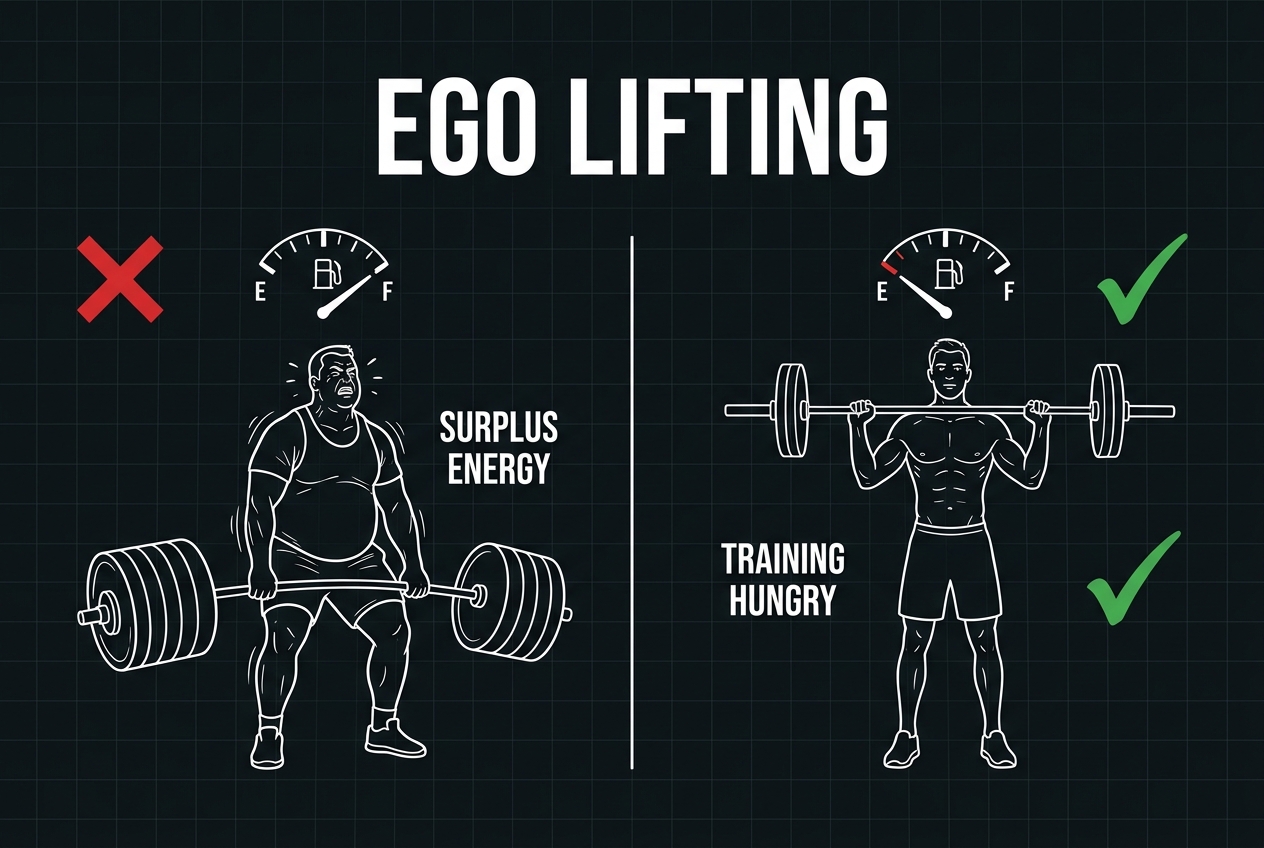
Lifting heavy is easy when you are carrying a surplus. The food is doing half the work and your lifts flatter you.
Training in a deficit is a different skill. The weight feels heavier, the sets feel longer, and the ego has to sit down.
Learning to train hungry is the part that actually changes your body.
13. Moderation is maintenance
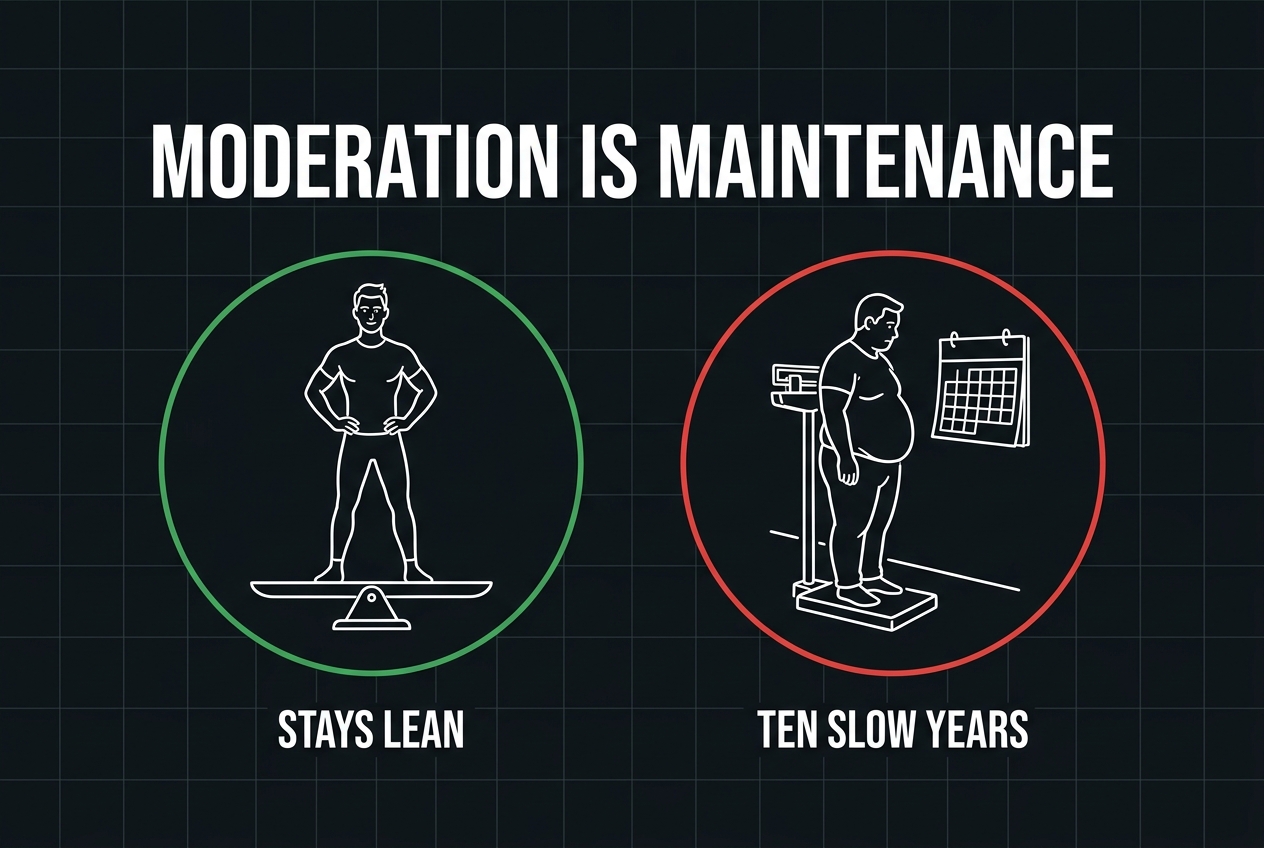
Moderation keeps a lean man lean. It is a brilliant tool once you are already where you want to be.
It is a terrible tool for getting there. "A bit of everything" is how a quiet surplus runs for ten years and puts on two stone so slowly that nobody can point at the week it happened.
Use moderation to hold a result. Use a protocol to create one.
14. It gets lonely first
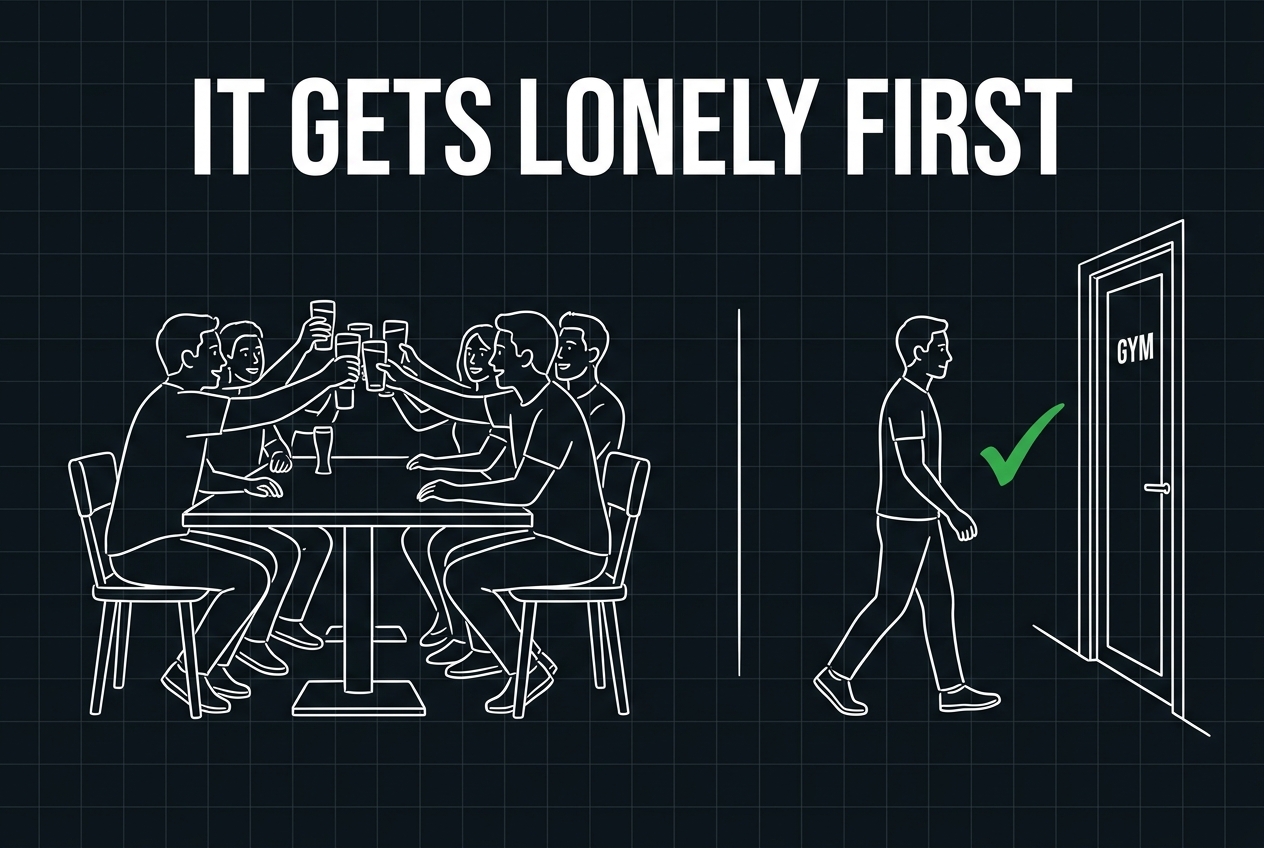
Changing your habits means stepping away from the table your friends are still sitting at. For a while, that is genuinely lonely.
It does not stay that way. The same people who questioned it end up asking you how you did it.
15. The actual skill
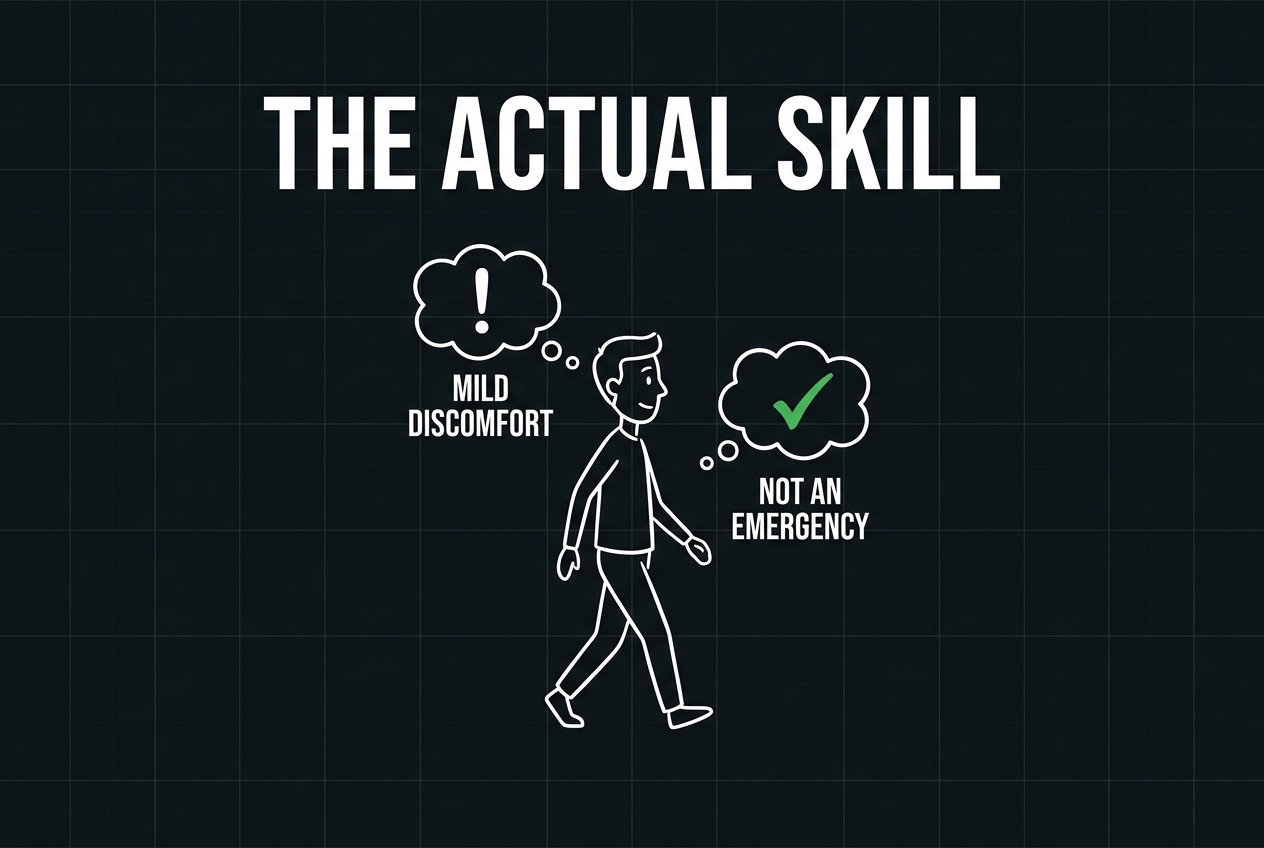
The real skill has nothing to do with macros. It is being mildly uncomfortable and not treating it as an emergency.
Slightly hungry. Slightly tired. Slightly bored. None of those require action, and all of them pass.
Everything you want is on the other side of being able to sit still for twenty minutes.
16. Discipline beats motivation
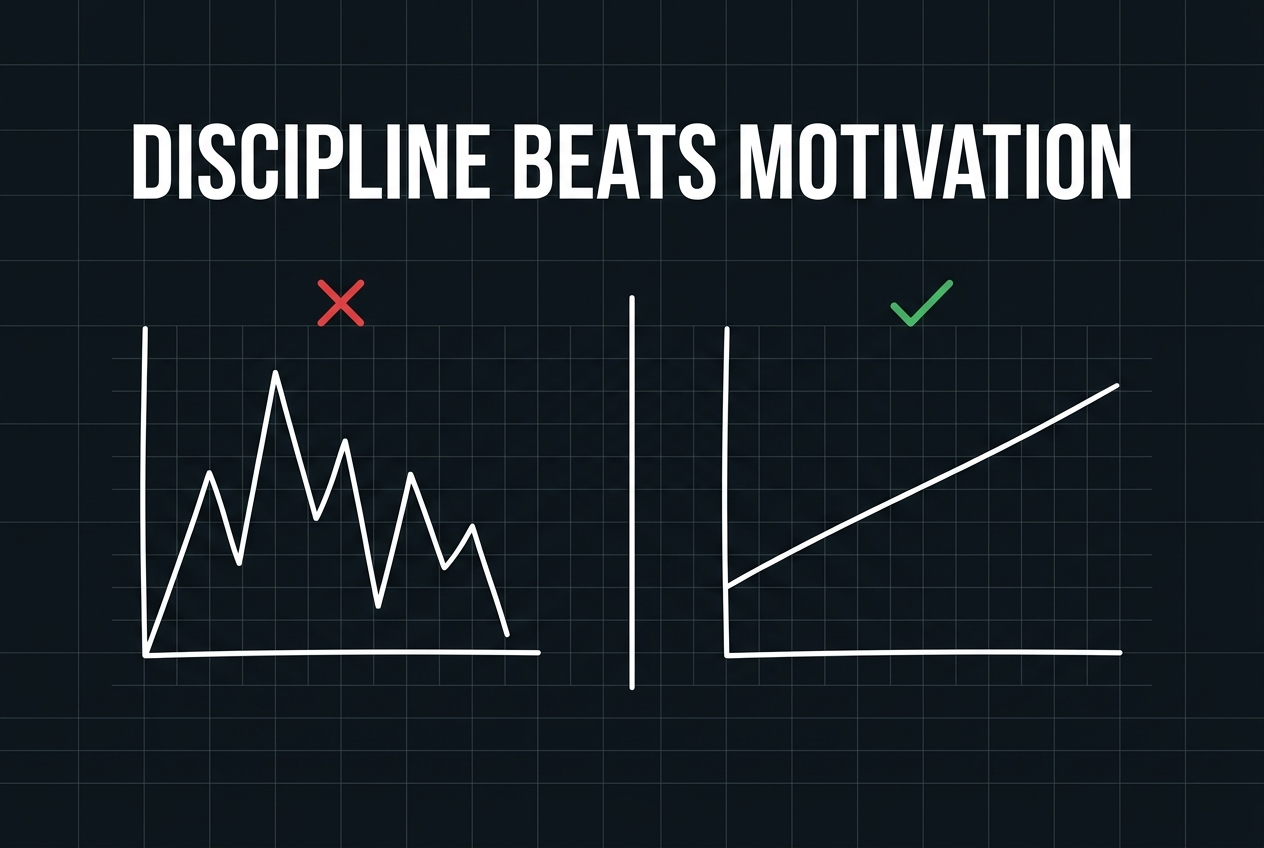
Motivation is spiky. It gets you three brilliant weeks and then a crash, over and over, and you end the year where you started.
Discipline is a dull straight line that goes up. It is less impressive on any single day and unbeatable over twelve months.
Where this came from
This post is a retelling of Kevin Boyle's video, slide by slide. Kevin has trained people for 11 years and works mainly with fathers over 40 — his channel is Apex Dad with Kevin Boyle and the original talk is here. Full credit for the thinking belongs to him.
The illustrations are ours, generated for this post. If any of these sixteen points landed uncomfortably close to home, that is the one to start with.
Keep reading
- DUP-3: Why I Train the Same Muscle at Three Different Rep Ranges Each Week — Rhea 2002: same exercises, same total volume, half the time — DUP gained 2x more strength than linear periodization. The 3-rotation version, in plain words.
- APRE 10: The Quiet Algorithm That Picks Your Working Weight For You — Mann's D-1 football protocol in 4 sets. Why the algorithm out-progresses linear programs by ~2x on bench and squat — and how to run it without thinking.
- Best Exercises for Biceps Peak (And the Honest Truth About Genetics) — Why biceps peak is 70% genetics and 30% training — and the exact 30% you can change with long-head-biased curls.
- The 60-Second Scan: How to Read a Restaurant Menu for Calories — Why "grilled chicken salad" can be 1,100 calories, and how 6 menu keywords tell you everything about calorie density in under a minute.
- How Much Protein You Should Eat Every Day to Build Muscle (Real Numbers, Not Bro-Science) — 1.6-2.2g per kg of bodyweight — backed by a 2018 meta-analysis of 49 studies. Why higher is just expensive pee, and how to hit the target with real food.
Try Fitness&me free — AI workout planner, calorie counter and body-fat scan